Diglot weave stories: what they are, and what to read next
If you’ve searched for “diglot weave” or “diglot books”, you’ve probably seen a sentence like this: The girl opens the ventana and sees the árboles. It looks odd at first, but it’s one of the gentlest ways into a new language. This page explains what a diglot weave is, where it works and where it runs out, and how reading graded stories with tap-to-translate (what Paperglot does) compares.
To be upfront: Paperglot is not a diglot weave app. Our stories are written in the language you’re learning, at your level, with help one tap away. Many learners use both: a diglot weave to get started, and graded stories once they want whole sentences in the new language.
Read your first story freeWhat is the diglot weave method?
“Diglot” comes from Greek: di- (two) and glotta (tongue), so a diglot text is a text in two languages. A diglot weave starts in a language you already know and gradually swaps in words and phrases from the language you’re learning. Early pages might have one Spanish word per paragraph. By the end, whole sentences are in Spanish.
The idea goes back to linguist Robbins Burling in the 1960s, and the name “diglot weave” was popularised by Robert Blair’s Power-Glide courses. Today you’ll find it in printed diglot weave books (often classic novels in “diglot editions”) and in a few reading apps that adjust the mix for you.
It works for a simple reason: context does the teaching. You meet ventana inside a sentence you already understand, so you can guess it’s “window” without a dictionary. Classroom studies have found diglot weave stories teach vocabulary at least as well as drill-based practice, and learners find them less stressful.
Where diglot weave books fall short
Diglot weave is a great on-ramp, but it has limits worth knowing before you buy a stack of diglot books:
- You mostly read your own language. Grammar, word order and sentence rhythm stay in English for most of the book, so you learn words more than you learn to read the new language.
- Fixed mix in print. A printed diglot book can’t adjust. If the pace is too slow or too fast for you, you’re stuck with it.
- Few languages. Most diglot weave readers are for Spanish and a handful of European languages. Options for Hindi, Japanese, Mandarin or Russian are scarce.
- Mixed scripts get awkward. Weaving Hindi or Japanese script into English sentences is much harder to read than weaving Spanish.
Diglot weave vs parallel text vs graded stories
There are three common ways to read your way into a language:
| Diglot weave | Parallel text (bilingual books) | Graded stories (Paperglot) | |
|---|---|---|---|
| What’s on the page | Diglot weaveMostly your language, target words woven in | Parallel text (bilingual books)Full text in both languages, side by side | Graded stories (Paperglot)Full text in the target language, written for your level |
| Best for | Diglot weaveTotal beginners collecting first words | Parallel text (bilingual books)Intermediate readers who can follow most of the target text | Graded stories (Paperglot)Beginners to advanced readers who want to read real sentences |
| Getting help | Diglot weaveContext only | Parallel text (bilingual books)Look across at the other column | Graded stories (Paperglot)Tap any word for its translation and audio; optional English translation under each sentence |
| Grammar and word order | Diglot weaveMostly your own language | Parallel text (bilingual books)Target language, if you read that side | Graded stories (Paperglot)Target language from the first sentence |
| Audio | Diglot weaveRare | Parallel text (bilingual books)Sometimes | Graded stories (Paperglot)Native-sounding audio for words and pages |
Parallel text and diglot weave both lean on your native language. Graded stories keep you in the new language, but keep each sentence short and familiar enough that you can follow it.
How Paperglot’s graded stories work
Paperglot is a reading app built on short, illustrated stories and longer story series, graded from absolute beginner to advanced. A beginner Spanish story reads like this:
El niño ve la pelota. (The boy sees the ball.)
La pelota es roja. (The ball is red.)
- Tap any word to see its translation and hear it spoken. No dictionary app, no browser extension.
- Sentence translations you can turn on or off. Keep the English line under each sentence while you find your feet, then switch it off to read on your own. It’s a bilingual, parallel-text style of support you control.
- Native-sounding audio. Listen to a whole page or a single sentence.
- Flashcards from your stories. Words you meet become flashcards with a practice mode.
- No ads, no hearts or energy limits. Read as much as you like, on desktop or mobile.
Languages: Spanish, German, Hindi, Italian, Russian, Chinese (Mandarin) and Japanese. French, Portuguese and Arabic are coming soon.
Try it out
Click any underlined word to see its translation and hear it spoken.
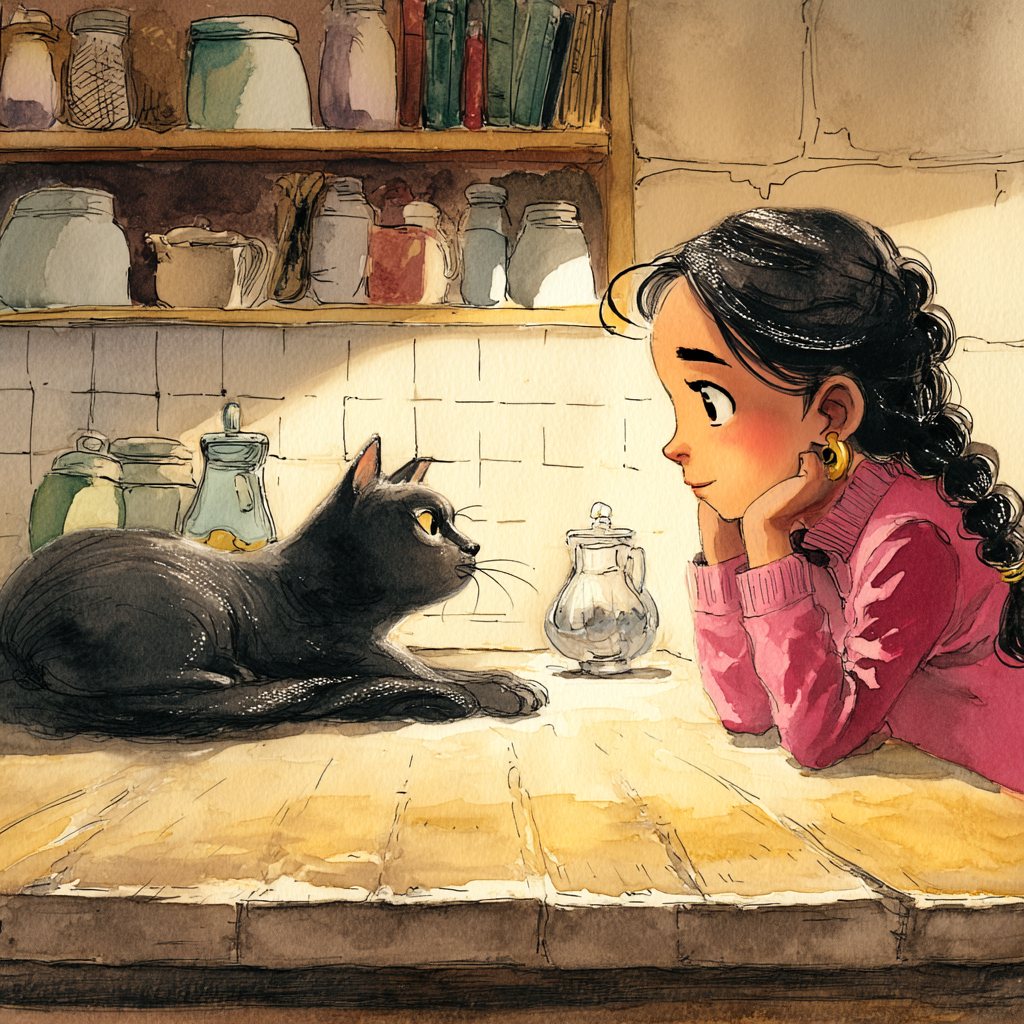
El gato negro está sobre la mesa.
The black cat is on the table.
El gato negro está feliz.
The black cat is happy.
How to use diglot weave and graded stories together
- Start with the very first words. If you know zero words, a short diglot weave story is a friendly way to collect your first 50 to 100.
- Switch to beginner stories early. Once simple sentences like El gato está feliz make sense, move to beginner Spanish stories (or your language’s beginner level) so you start reading the language itself.
- Use the translation toggle as training wheels. Read with sentence translations on, then try each new story with them off and tap only the words you need.
- Listen, then reread. Play the page audio, then read again without it. Repetition is where words stick.
- Read a little every day. Ten minutes and one short story a day adds up faster than one long weekend session.
Why Paperglot doesn’t use a diglot weave (yet)
We chose full sentences in the target language because that’s what you’ll eventually need to read, and short graded sentences make it possible from day one. With tap-to-translate and optional sentence translations, the safety net of a diglot weave is still there; it’s just one tap away instead of woven into the text.
Frequently asked questions
What is a diglot weave?
A diglot weave is a reading method where a story starts in your native language and gradually replaces words and phrases with the language you’re learning, so you pick up their meaning from context. By the end, much or all of the text is in the new language.
Do diglot weave books work?
Studies have found diglot weave stories teach vocabulary at least as well as drill-based practice, and learners find them low-stress. They’re best for collecting first words. Because most of the text stays in your native language, you’ll want to move on to reading full sentences in the new language as soon as you can.
Is Paperglot a diglot weave app?
No. Paperglot stories are written in the language you’re learning and graded by level. You can tap any word for a translation and audio, and turn on an English translation under each sentence, so beginners get similar support without the mixed-language text.
What’s the difference between diglot weave, parallel text and graded readers?
A diglot weave mixes target-language words into a native-language text. Parallel text gives you the full text in both languages side by side. Graded readers, like Paperglot’s stories, are written entirely in the target language at a simplified level for your stage.
Are there diglot weave stories for Spanish?
Yes, Spanish has the most diglot weave books and readers. If you’re past your first few dozen words, Paperglot’s beginner Spanish stories are a natural next step: short sentences, tap-to-translate, native-sounding audio and optional sentence translations.
Is Paperglot free?
Yes. You can read 4 short stories free, with tap-to-translate and audio, and no credit card. The Monthly Pass ($9.99/month) or Annual Pass ($79.99/year) unlocks every story and series.
Start reading free
Paperglot’s free plan includes 4 short stories with tap-to-translate and audio, plus a preview of the story series. No credit card needed. The Monthly Pass is $9.99/month, or $79.99/year with the Annual Pass (about $6.67/month).